
Open daily 8:00 AM to 8:00 PM

About us

History of the Vihara

An idea from the late 1980s, twelve years of patient fundraising, and a monastery that has grown steadily ever since.
From an idea to a monastery

The idea of a great Buddhist centre on Mahendra Hills was conceived in the late 1980s by Sri C. Anjaneya Reddy, a retired senior police officer and devoted lay Buddhist, remembered at the Vihara as its Mahā Upāsaka, its principal patron.

Land was made available by the Government of Andhra Pradesh, and successive Chief Ministers supported the project. It took about twelve years to raise the funds. The work grew out of the Ānanda Buddha Vihāra Trust, which had begun its activities at Tukaramgate in 1985.

The new monastery was opened as the Ānanda Buddha Vihāra on 6 April 2003 by His Holiness the 14th Dalai Lama. Some years later it was entrusted to the Maha Bodhi Society, Bengaluru, and became Mahabodhi Buddha Vihara, the Society’s Hyderabad branch.

  1. 1985

    The trust begins

    The Ānanda Buddha Vihāra Trust starts its work at Tukaramgate.

  2. Late 1980s

    An idea for Mahendra Hills

    Sri C. Anjaneya Reddy proposes a large Buddhist centre on the hill.

  3. 2003

    The Vihara opens

    His Holiness the Dalai Lama opens the Ānanda Buddha Vihāra on 6 April. Sri Lankan monks bring a Bodhi sapling.

  4. Later years

    Into the care of the Maha Bodhi Society

    The Vihara becomes the Hyderabad branch of the Maha Bodhi Society, Bengaluru.

  5. 2015

    A sīmā

    A consecrated boundary for ordinations and formal acts of the Sangha is established.

  6. 2019

    A relic of the Buddha

    On 13 January a relic is enshrined in the newly completed Buddha Dhātu Stūpa.

  7. Today

    Meditation quarters

    Residential quarters for meditators are being built with support from the Government of Telangana.

The relic and the stūpa

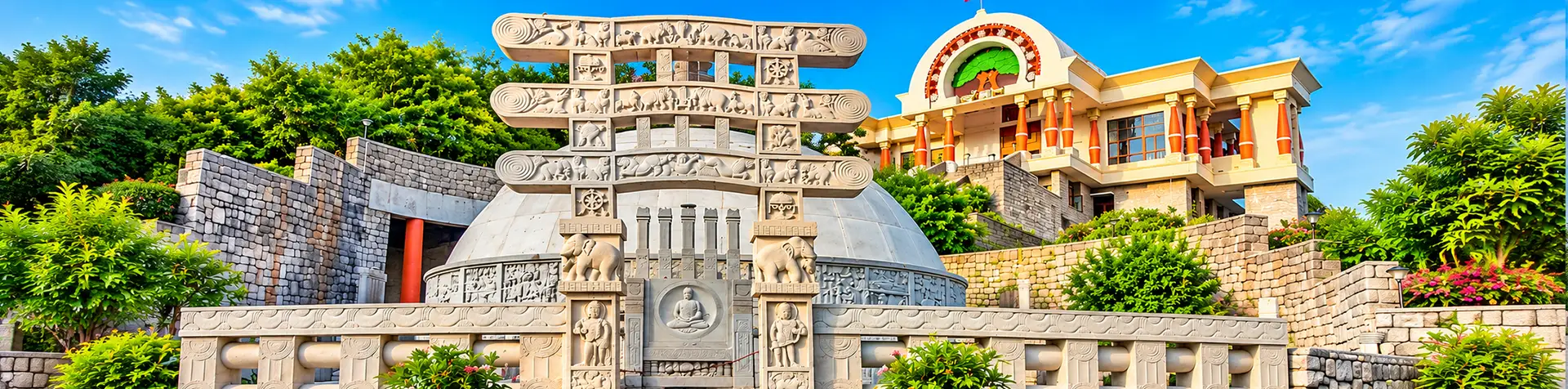
In January 2019 a relic of the Buddha arrived from Thailand. After a public procession in Hyderabad it was carried to Mahendra Hills and enshrined in the Buddha Dhātu Stūpa on 13 January 2019, in a ceremony led by senior monks of the Theravāda tradition from India and abroad.

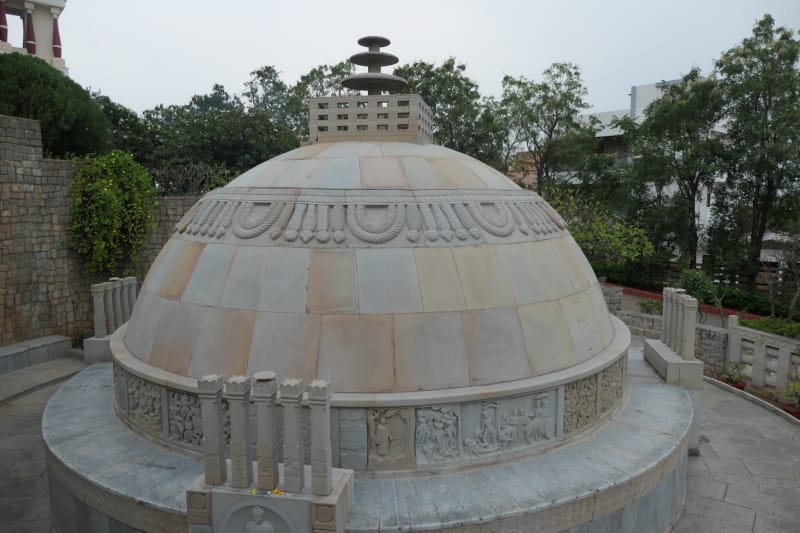
The stūpa is built in the style of the Mahāstūpa at Amaravati in Andhra Pradesh, one of the great monuments of early Buddhism. Its drum carries reliefs of the Buddha’s life, from his birth to the division of his relics, and its gateway is guarded by elephants beneath a Dhammacakka.

The Buddha Dhātu Stūpa

Help write the next chapter

The meditation quarters will let people stay for longer retreats. Every contribution helps finish them.